8 Best Mortar Types for Durable Stone Wall Building
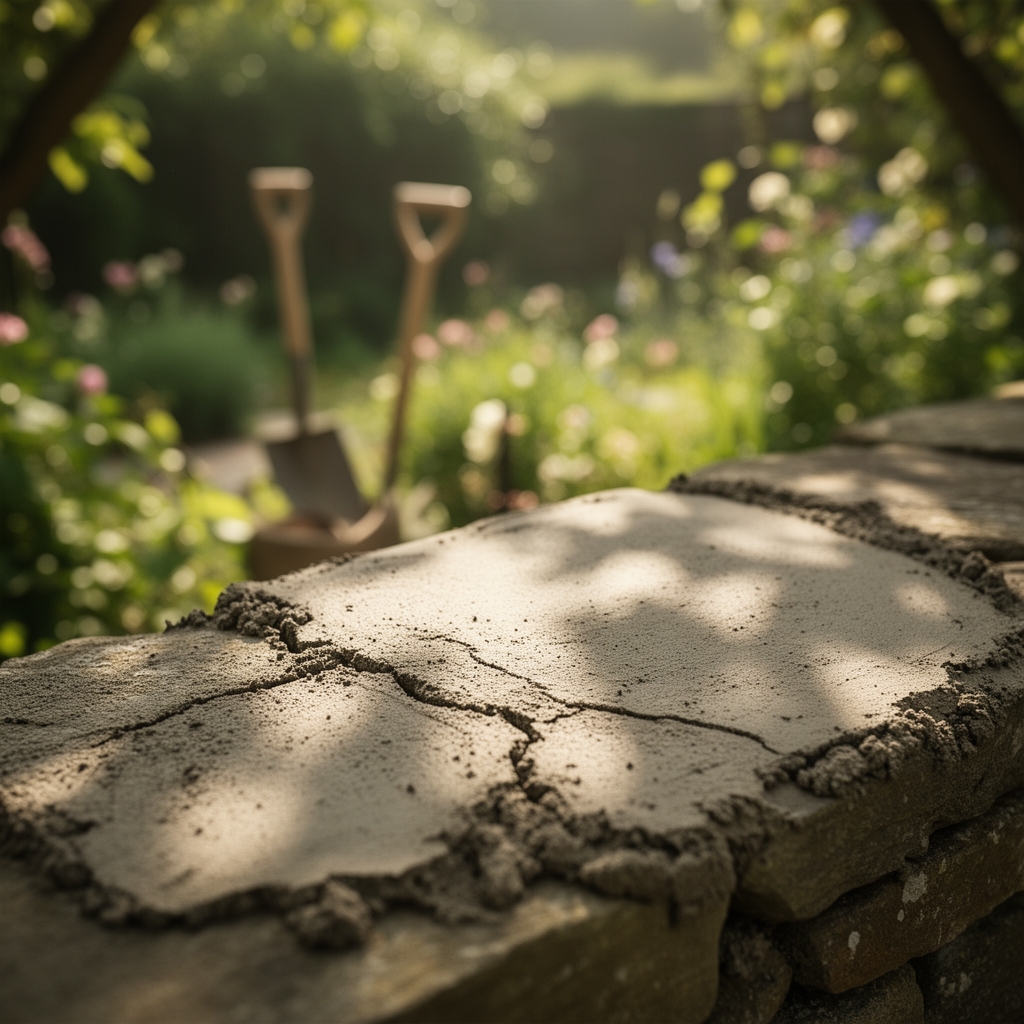
The crumbling joint between two sandstone blocks signals the single greatest structural weakness in any garden wall. Choosing the best mortar for stone garden walls determines whether your terraced beds will stand for decades or slump into rubble after three freeze-thaw cycles. Traditional lime mortars flex with seasonal movement; modern polymer-modified blends lock stones rigid. Each formulation serves a distinct soil chemistry, climate zone, and stone porosity profile.
Materials
Type N (Medium-Strength Lime Mortar)
Portland cement 1 part, hydrated lime 1 part, sand 6 parts. Compressive strength 750 psi. pH 12.4 at cure. Compatible with limestone, sandstone, and fieldstone exhibiting high porosity. Permits vapor transmission critical for walls backing rhododendrons and other calcifuge plantings requiring acid soils (pH 4.5-5.5). Mimics historic masonry practice.
Type S (High-Strength Structural Blend)
Portland cement 2 parts, hydrated lime 1 part, sand 9 parts. Compressive strength 1,800 psi. Resists lateral soil pressure in retaining walls exceeding 4 feet. Alkaline leachate (pH 12.8) neutralizes acidic soils within 18 inches of joints. Pair with granite, basalt, or dense limestone where minimal flex is acceptable.
Hydraulic Lime Mortar (NHL 3.5)
Natural hydraulic lime with silica content allowing underwater cure. Compressive strength 500-900 psi. Sets in 48 hours; reaches full strength in 28 days via carbonation. Ideal for zones 3-6 where moisture infiltration and freeze-thaw demand elasticity. Cation exchange capacity of 15 meq/100g permits nutrient buffering in adjacent planting pockets.
Polymer-Modified Type N
Standard Type N with 5% acrylic polymer admixture. Tensile adhesion increases 300%. Waterproofing suitable for walls integrated with irrigation systems or water features. Polymer films inhibit mycorrhizal colonization of rootstocks within 6 inches; maintain 12-inch clearance from ericaceous plantings.
Non-Hydraulic Lime Putty Mortar
Slaked lime aged 3-12 months, sand 3:1 ratio. Compressive strength 200-400 psi. Self-healing via autogenous carbonation. Historical choice for dry-stack stone walls pointed after construction. Requires 6-month cure before bearing significant load. pH stabilizes at 8.5, supporting clematis and other lime-loving climbers.
Colored Oxide Mortars
Type N or S base with 10% iron oxide (red/brown), carbon black (gray), or chromium oxide (green). Alters neither strength nor permeability. Match local stone hues to recede joint lines visually. Avoid copper-based pigments near edible gardens; copper ions at 200 ppm inhibit auxin distribution in root tips.
Refractory Mortar (High-Alumina)
Calcium aluminate cement with crushed firebrick. Withstands 2,000°F. Specialized for walls incorporating pizza ovens or fire pits. Alumina content (40%) raises soil aluminum to phytotoxic levels; line planting beds with 6-mil HDPE barrier.
Pre-Mixed Polymer Bag Mortar
Proprietary Portland-polymer blend requiring only water. Consistent batch strength; eliminates field mixing errors. Shelf life 12 months. Higher cost per cubic foot but reduces labor 30%. Verify VOC content below 50 g/L if working near USDA organic certification boundaries.
Timing
Mix and apply mortar when ambient temperature holds between 40°F and 90°F for 48 hours post-application. Zones 3-5: April 15-October 1. Zones 6-7: March 20-November 10. Zones 8-10: year-round with afternoon shade during summer installation.
Lime mortars require 7-day moist cure. Drape walls with burlap and mist twice daily. Portland blends achieve 70% strength in 7 days, full cure in 28 days. Schedule wall construction to finish 6 weeks before first hard frost. Frozen mortar before initial set causes 60% strength loss and spalling.
Phases

Foundation and First Course
Excavate to 6 inches below frost line. Lay 4 inches of crushed stone, then 2 inches of coarse sand. Compact to 95% density. Set first course dry, then pour hydraulic lime grout into voids. Ensures capillary break preventing salt wick and efflorescence.
Pro-Tip: Introduce Rhizophagus irregularis spores (5 grams per cubic foot) into backfill soil. Mycorrhizal fungi colonize plant roots within 8 weeks, improving phosphorus uptake in alkaline mortar zones.
Mid-Height Courses
Butter stone backs and edges with 1-inch mortar bed. Press to achieve 3/8-inch to 5/8-inch joints. Rake joints 1/2 inch deep before initial set (90 minutes at 70°F). Recessed joints shed water and reduce frost damage.
Pro-Tip: Angle joint rake tool 15 degrees downward from exterior face. Creates drip edge preventing water entry.
Capping and Finishing
Top course requires through-stones (full wall thickness) every 4 feet. Cap with mortared flagstone or brick-on-edge coping. Slope coping 2% toward exterior. Seal coping/wall junction with concave bead, tooled smooth.
Pro-Tip: Apply silane/siloxane penetrating sealer to coping only. Protects mortar while allowing wall body to breathe. Reapply every 5 years.
Troubleshooting
Symptom: White crystalline deposits on stone face (efflorescence).
Solution: Excess water mobilizing calcium salts. Improve drainage behind wall. Install weep holes every 10 feet, 4 inches above grade. Switch to low-alkali hydraulic lime for repairs.
Symptom: Horizontal cracking at mid-height.
Solution: Differential settlement or inadequate wall thickness. Wall height should not exceed 3 times wall thickness. Rebuild with stepped footing or add buttresses every 12 feet.
Symptom: Mortar crumbles to powder when scratched.
Solution: Frozen during cure or mixed too lean. Remove soft mortar to 1-inch depth. Repoint with Type N in temperatures above 50°F. Add 1 part additional lime to improve workability without strength loss.
Symptom: Brown discoloration bleeding from joints.
Solution: Iron oxide from ferrous aggregate or tools. Use stainless steel trowels. Treat stains with 1:10 phosphoric acid solution, rinse thoroughly.
Symptom: Moss colonizing shaded joints.
Solution: Excess moisture retention. Apply copper sulfate solution (1 ounce per gallon) to joints only. Keep solution off adjacent plantings; copper ions damage chloroplast membranes at 10 ppm.
Maintenance
Inspect joints each spring. Repoint any eroded sections exceeding 1/2 inch depth. Brush wall face annually with stiff natural-bristle brush to remove soil and organic debris. Avoid pressure washing; stream force exceeding 1,500 psi erodes lime mortar.
Water plantings at wall base with drip irrigation delivering 1 inch per week during growing season. Soaker hoses placed 12 inches from wall prevent saturation of mortar joints. Mulch planting beds with 2 inches of shredded hardwood bark, maintaining 3-inch clearance from stone.
Trim perennial growth to 6 inches from wall face. Root exudates and organic acids (oxalic, citric) lower mortar pH and accelerate carbonation in unintended areas. Established ivy roots generate 150 psi lateral force sufficient to displace stones in weak mortars.
FAQ
What is the best mortar for stone garden walls in cold climates?
Hydraulic lime NHL 3.5 or Type N with air-entraining admixture (6% air content). Both flex with freeze-thaw without cracking.
Can I repoint old walls with modern Portland mortar?
No. Portland is harder and less permeable than historic lime. Trapped moisture will spall original stones. Match existing mortar type.
How long before I can plant near a new stone wall?
Wait 4 weeks. Initial alkaline leachate (pH 12+) burns root hairs. First rain will lower adjacent soil pH to tolerable 7.5-8.2.
Should I seal the entire wall?
No. Seal coping and top course only. Full sealing traps moisture, causing interior frost damage and salt accumulation.
What joint width is strongest?
3/8 inch to 5/8 inch. Narrower joints crack from stone movement. Wider joints reduce stone-to-stone load transfer and increase material cost.