9 Steps to Clean Mineral Deposits Off Garden Nozzles
White crust forms where water meets metal. The chalky buildup clogs spray patterns, turning once-precise jets into erratic dribbles that waste water and stress plants. Hard water carries dissolved calcium carbonate and magnesium that precipitate on brass, plastic, and aluminum surfaces. Steps for cleaning calcium deposits off nozzles restore flow rates and extend equipment life without replacing parts. A garden nozzle blocked by mineral scale delivers uneven coverage, creating drought pockets in container soil and wash-out zones in seed beds.
Materials
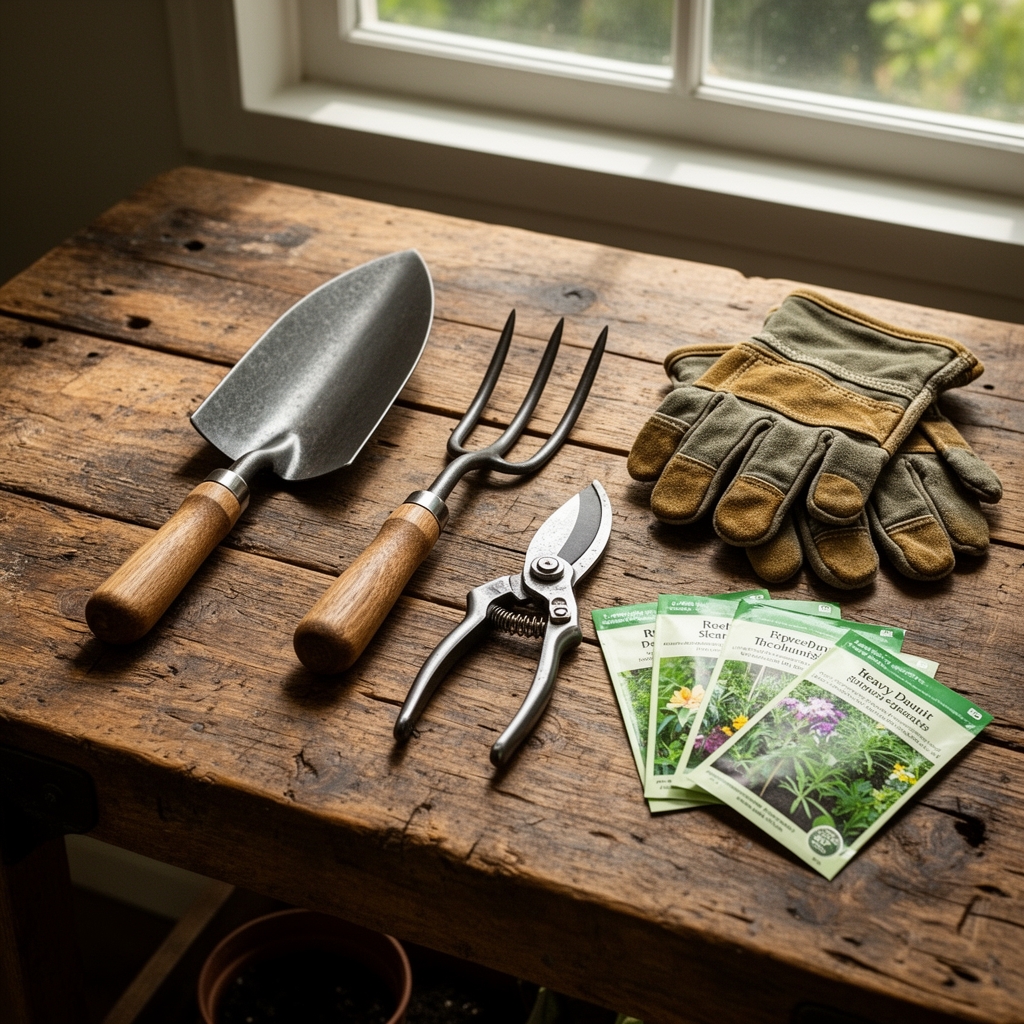
White vinegar (5% acetic acid, pH 2.4) dissolves calcium carbonate through chelation. Citric acid powder (food-grade, pH 2.2 when dissolved at 10% concentration) offers faster action on stubborn deposits. A stiff nylon brush (0.012-inch bristle diameter) removes loosened scale without scratching metal threads. Plastic bucket (2-gallon capacity) holds soaking solution. Distilled water (pH 7.0, 0 ppm dissolved solids) rinses away acid residue that would otherwise corrode brass fittings. Old toothbrush reaches interior passages and O-ring grooves. Safety glasses protect eyes from splashes during agitation.
For preventive maintenance, install an inline sediment filter rated at 150 mesh (100 microns). This captures particulate before it reaches emitters. If municipal water exceeds 180 ppm hardness, consider a water softener to reduce cation exchange load on irrigation components.
Timing
Address mineral buildup every 30 to 45 days during active growing season (USDA Hardiness Zones 3–9, April through September). In Zones 10–11, clean every 20 days year-round due to constant irrigation demand. Perform deep cleaning before storing equipment for winter, typically two weeks after first frost date. Spring cleaning should occur one week before last frost date, ensuring nozzles deliver accurate flow for germination watering.
Hard water regions (above 250 ppm total dissolved solids) require bi-weekly inspections. Check nozzles after applying liquid fertilizers with high calcium content (15-0-0 calcium nitrate solutions) as these accelerate scale formation.
Phases

Disassembly Phase: Remove nozzle from hose by turning counterclockwise. Separate adjustable spray heads from body. Extract internal screens and flow restrictors, noting orientation for reassembly. Mineral deposits often cement parts together. Apply penetrating oil to frozen threads 10 minutes before attempting removal. Photograph complex multi-part nozzles before disassembly to guide reassembly.
Pro-Tip: Mark thread depth with permanent marker before disassembly. This prevents over-tightening during reassembly, which distorts spray patterns.
Soaking Phase: Mix 1 part white vinegar to 1 part water in plastic bucket. Submerge all metal and plastic components. Soak for 2 to 4 hours for light deposits, 8 to 12 hours for heavy scale. Citric acid solution (1/4 cup powder per quart of warm water) cuts soaking time by half but requires ventilation due to stronger fumes. Agitate container every 30 minutes to dislodge loosened particles.
Aluminum nozzles require diluted solution (1 part vinegar to 3 parts water) to prevent pitting. Brass and stainless steel tolerate full-strength acid without damage.
Pro-Tip: Heat soaking solution to 110°F to accelerate chemical reaction. Do not exceed 120°F as this degrades rubber gaskets and O-rings.
Scrubbing Phase: Remove parts from solution. Scrub external surfaces with nylon brush using circular motions. Insert toothbrush bristles into spray orifices, rotating to clear passages. Flush internal channels with distilled water using a syringe or squeeze bottle. Inspect threads under magnification to verify complete scale removal. White residue in crevices indicates additional soaking required.
Pro-Tip: Run 22-gauge floral wire through clogged orifices to mechanically break up core deposits before final flush.
Troubleshooting
Symptom: Uneven spray pattern after cleaning.
Solution: O-rings swelled from prolonged acid exposure. Replace with Buna-N rubber gaskets rated for pH 2–12. Install dry, without lubricant, to prevent slippage.
Symptom: Persistent white film despite soaking.
Solution: Magnesium silicate scale (not calcium carbonate). Switch to phosphoric acid-based cleaner (CLR brand, 1:3 dilution) for 30-minute soak. Rinse thoroughly to prevent phosphorus buildup in soil.
Symptom: Reduced flow after reassembly.
Solution: Internal screen installed backwards. Flow restrictors have directional arrows; align with water flow. Crimped washers should face toward hose connection.
Symptom: Leaking at connection point.
Solution: Cross-threaded during reassembly. Threads damaged by over-torquing require replacement. Hand-tighten connections to finger-tight plus one-quarter turn with pliers.
Maintenance
Flush nozzles with 1 gallon of distilled water after each fertilizer application. Store nozzles in dry location with caps covering threads to prevent dust infiltration. Apply food-grade silicone grease to O-rings every 60 days. Inspect brass components for green verdigris (copper oxidation) monthly; remove with baking soda paste (3:1 ratio with water).
Install nozzles with Teflon tape (3 wraps clockwise when viewing threads head-on) to seal microleaks that concentrate minerals. Replace nozzles showing pitting or erosion after 400 hours of use. Track runtime with simple tally marks on waterproof tape affixed to hose.
Test spray pattern monthly by directing output at dark pavement. Uniform fan indicates proper function. Streaks or concentrated jets signal partial blockage requiring immediate cleaning.
FAQ
How often should I clean nozzles in hard water areas?
Every 20 days during growing season. Water above 180 ppm hardness accelerates calcium carbonate deposition, reducing this interval by 30%.
Can I use CLR or lime-away products?
Yes, at 1:3 dilution for brass and stainless steel. Avoid on aluminum. These phosphoric acid formulas work faster than vinegar but require three distilled water rinses.
Will mineral deposits harm plants?
No, but clogged nozzles create uneven watering. Dry spots stress root systems and reduce nutrient uptake through compromised cation exchange capacity in soil.
Should I replace or clean severely scaled nozzles?
Clean first. Even nozzles with 2mm thick deposits respond to overnight citric acid soaking. Replacement costs $8–$25; cleaning costs under $1 in materials.
Do plastic nozzles resist mineral buildup better than brass?
No. Material affects corrosion resistance, not scale accumulation. Calcium carbonate adheres equally to all surfaces in contact with hard water.