7 Ways to Use a Hygrometer for Indoor Plant Health
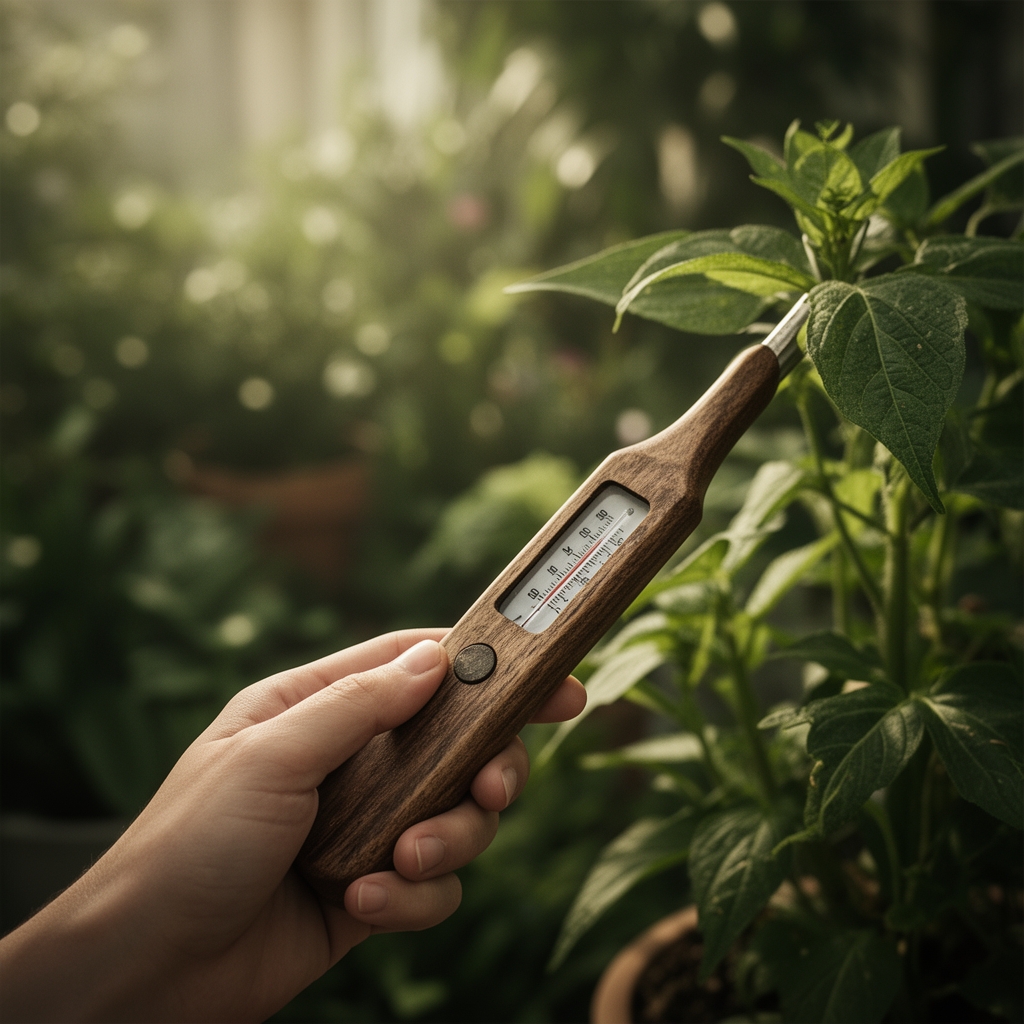
Using a hygrometer to track indoor plant health transforms guesswork into precision. The instrument measures relative humidity, the invisible force that governs transpiration rates, stomatal function, and pathogen proliferation. Most tropical foliage species thrive between 50-70% relative humidity, while succulents tolerate 30-40%. Desert cacti demand even drier air. A hygrometer places exact numbers on the moisture vapor in your growing space, allowing you to match each specimen's evolutionary adaptations to your indoor microclimate.
Materials
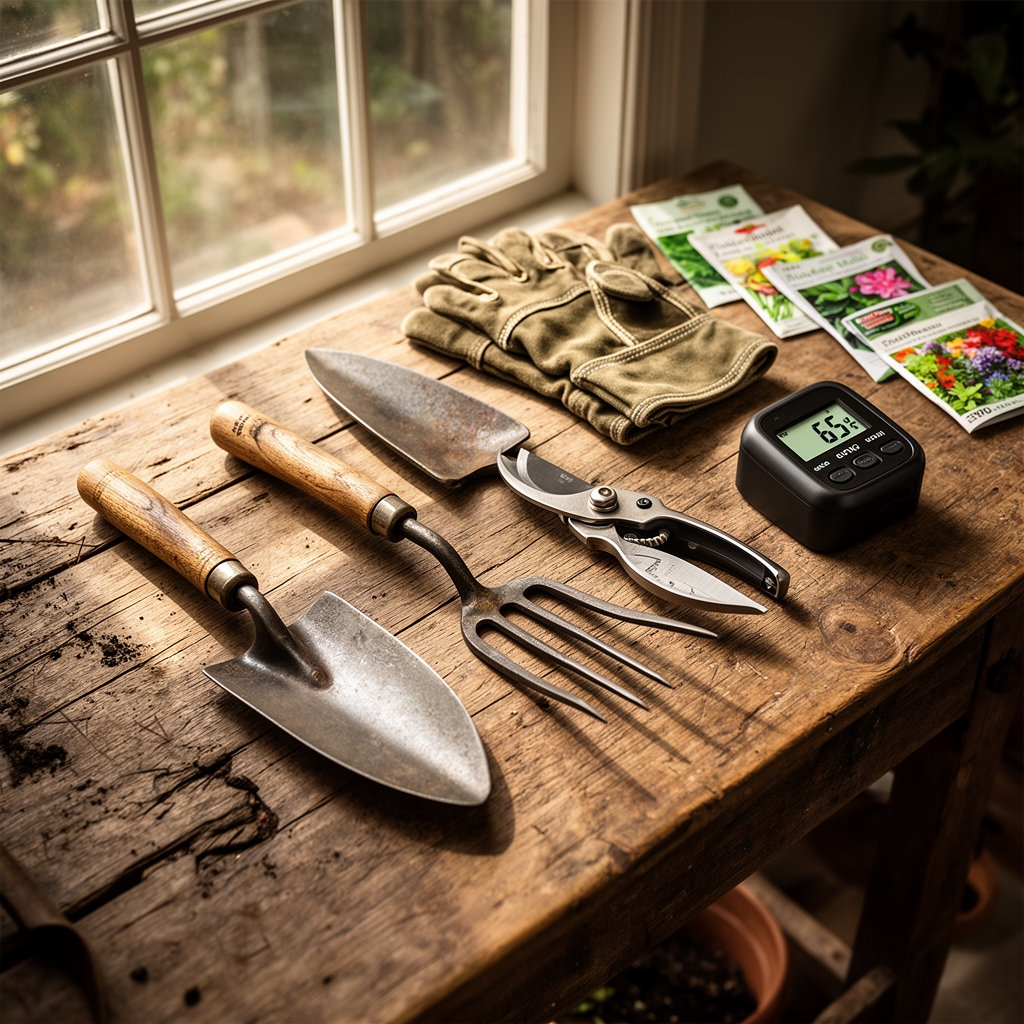
Select a digital hygrometer with ±3% accuracy. Analog dial models drift over time and require annual recalibration. Pair the device with a data-logging thermometer to track vapor pressure deficit, the mathematical relationship between temperature and humidity that drives xylem flow.
For substrate preparation, use a 5-3-2 NPK organic blend for tropical aroids and ferns. The moderate nitrogen supports leaf expansion without promoting leggy growth in low-light interiors. Epiphytic orchids require bark media with negligible nutrient content; apply diluted 3-1-2 liquid fertilizer biweekly during active growth. Cacti and succulents perform best in mineral-heavy mixes with 2-7-7 NPK ratios that prioritize phosphorus and potassium over nitrogen.
Amend potting media with perlite or pumice to raise cation exchange capacity. These minerals buffer against rapid pH swings caused by chlorinated tap water. Incorporate endomycorrhizal fungi inoculant at transplant for species with fine root systems.
Timing
Indoor growing bypasses hardiness zones, but photoperiod still governs flowering in short-day plants like poinsettias and kalanchoes. Position the hygrometer 12 inches from your primary plant cluster at foliage height, not near heating vents or humidifiers where readings skew.
Check readings three times daily: morning, midday, and evening. Humidity fluctuates with heating cycles. HVAC systems drop indoor relative humidity to 20-30% during winter in temperate climates, stressing tropical specimens. Summer air conditioning condenses moisture, sometimes raising levels above fungal thresholds for susceptible genera like Begonia and Saintpaulia.
Phases
Sowing
Seed germination requires 70-85% relative humidity for most tropical and subtropical species. Place the hygrometer inside the propagation dome or sealed tray. Condensation on the lid confirms saturation. Crack the vent once readings exceed 90% to prevent damping-off fungi like Pythium and Rhizoctonia.
Pro-Tip: Mist coir or peat-based seed-starting mix with chamomile tea. The antifungal compounds suppress pre-emergence rot without synthetic fungicides.
Transplanting
Newly transplanted seedlings demand 60-70% humidity while root hairs regenerate. Auxin distribution shifts from root tips to shoot apices under transplant stress, slowing water uptake. Monitor hygrometer readings and tent transplants with clear plastic for 72 hours if levels drop below 55%.
Water thoroughly at transplant, then withhold until the hygrometer confirms ambient humidity has stabilized. Overwatering during this phase causes anaerobic conditions in the root zone, even if air moisture is adequate.
Pro-Tip: Prune lateral roots at a 45-degree angle during transplant. Clean cuts heal faster than tears, reducing pathogen entry points.
Establishing
Maturation takes 4-8 weeks depending on species growth rate. Gradually reduce humidity by 5% weekly until reaching the target range for your plant's native biome. Ferns from cloud forests tolerate persistent 65-75% humidity. Bromeliads accept 45-60%. Snake plants and ZZ plants function below 40%.
Pro-Tip: Cluster plants with similar humidity requirements. Grouped foliage creates a localized humid microclimate through collective transpiration, raising readings 8-12% compared to isolated specimens.
Troubleshooting
Symptom: Brown, crispy leaf margins on Calathea, Maranta, or ferns.
Solution: Relative humidity below 50%. Raise levels with a cool-mist humidifier or pebble trays. Avoid misting foliage; surface wetness encourages bacterial leaf spot.
Symptom: Powdery white fungal growth on leaf surfaces.
Solution: Humidity above 75% with poor air circulation. Reduce moisture levels and introduce oscillating fans. Apply sulfur-based fungicide at labeled rates.
Symptom: Bud drop on orchids and gardenias before flowers open.
Solution: Sudden humidity swings exceeding 20% within 24 hours. Stabilize environment with consistent humidifier operation during bud development.
Symptom: Spider mite webbing on undersides of leaves.
Solution: Chronic low humidity below 40%. These arachnids thrive in arid conditions. Raise levels to 55% and spray foliage with insecticidal soap.
Maintenance
Maintain hygrometer accuracy by recalibrating every six months using the salt test. Mix table salt with water to form slush, seal in a jar with the sensor for six hours. Readings should stabilize at 75%; adjust accordingly.
Apply 0.5 inches of water per week for most foliage plants when humidity stays within target range. Reduce to 0.25 inches if levels exceed 70%, as high ambient moisture slows transpiration and water uptake. Increase to 0.75 inches when readings drop below 40%.
Clean hygrometer sensors monthly with isopropyl alcohol on a cotton swab. Dust and mineral deposits from humidifiers degrade accuracy by 5-10% over time.
FAQ
How does humidity affect nutrient uptake?
Low humidity increases transpiration, pulling more calcium and magnesium through xylem channels. High humidity slows this mass flow, potentially causing deficiencies in fast-growing species.
Can I rely on a single hygrometer for multiple rooms?
No. Each space develops distinct microclimates based on sunlight exposure, ventilation, and occupancy. Deploy separate units per growing area.
What is the ideal humidity for seedling propagation?
75-80% until true leaves emerge, then taper to species-specific adult requirements over two weeks.
Do succulents need hygrometer monitoring?
Yes. Chronic humidity above 50% promotes etiolation and fungal infections in Echeveria, Lithops, and Haworthia.
How quickly can I adjust humidity levels?
Humidifiers raise levels 10% per hour. Dehumidifiers or ventilation drops readings 15% hourly. Make changes gradually to avoid shocking plant tissues.